
Radar vs. LiDAR: Which Is Easier to Challenge in Court?
Jan. 9, 2026
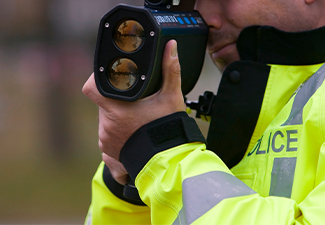 Receiving a speeding ticket can often lead to points on your license, higher insurance rates, and a hefty fine. Law enforcement commonly uses radar and LiDAR detection devices to calculate your speed, but these devices are not infallible.
At Michael Kuzma Attorney at Law, I’ve spent over two decades helping people fight traffic tickets. I understand the technology police use and, more importantly, how to challenge it. If you’ve received a speeding ticket, it's important to know that you have options.
Located in Buffalo, New York, I help drivers ticketed in New York State, questioning the evidence brought against them. Before you pay a ticket, speak with an experienced attorney who can explain the differences between radar and LiDAR detection tools and instruct you on how to build a strong defense.
Radar Technology for Speed Detection
Radar, which stands for radio detection and ranging, is the technology most people think of when they picture a police speed trap. It has been in use for decades and operates on a principle known as the Doppler effect. For example, a police radar gun sends out a radio wave at a specific frequency. This wave travels through the air, hits a moving object (your car), and bounces back to the radar unit.
If your car is moving toward the gun, the returning wave is compressed, raising its frequency. If you're moving away, the wave is stretched, lowering its frequency. The radar unit calculates the difference between the sent and received frequencies to determine your vehicle's speed.
Common Weaknesses of Radar
While radar is a standard tool, it is far from perfect. Its widespread use and underlying technology create several avenues for a legal challenge. Some of the common weaknesses of radar devices include:
Wide beam: A radar beam can spread out to cover multiple lanes of traffic. This lack of precision can make it difficult for an officer to be certain which vehicle the reading belongs to, especially on a busy road. This is known as a "lack of tracking history" defense. Was it your car, or the one next to you, or the one that just passed you?
Susceptibility to interference: Other electronic signals, such as those from automatic door openers, CB radios, or even high-tension power lines, can disrupt radar readings and produce inaccurate speed readings. Weather conditions such as heavy rain or snow can also scatter the radio waves and affect the result.
Officer training and device calibration: For a radar reading to be admissible in court, the officer must be properly trained to operate the specific model, and the unit must have been recently calibrated and tested. If proper procedures were not followed, a strong basis for a challenge may be created.
LiDAR Technology for Speed Detection
LiDAR, which stands for light detection and ranging, is a more modern technology. Instead of radio waves, LiDAR uses a highly focused beam of infrared light. It works by sending out a series of quick light pulses—hundreds or even thousands in less than a second.
These pulses bounce off a target vehicle and return to the LiDAR gun. The device measures the time it takes for each pulse to make the round trip. By comparing the changing time between successive pulses, the gun calculates the distance the vehicle traveled over that short period. From there, it computes the vehicle’s speed with a high degree of precision.
How to Challenge a LiDAR Speeding Ticket
At first glance, LiDAR seems to eliminate many of radar's weaknesses when it comes to speeding tickets. Its beam is incredibly narrow—often just a few feet wide, even at a distance of 1,000 feet. This allows an officer to target a specific vehicle, even in heavy traffic, making it much harder to argue that the officer clocked the wrong car. The use of light also makes it less prone to radio-frequency interference that affects radar. However, LIDAR has its own vulnerabilities that can be exploited in defense.
The very precision of LiDAR can be its downfall. Since the beam is so narrow, the officer must hold the device extremely steady to get an accurate reading. Any slight movement of the officer’s hand, known as a "sweep error," can cause the laser to hit a different part of the vehicle, such as a side mirror or the hood, instead of the front license plate. This can distort the distance measurement and produce a falsely high-speed reading.
Like radar guns, LiDAR units must be properly calibrated and tested. The officer must also be specifically trained in operating the device. Many departments use both radar and LiDAR, and it's important to confirm that the officer's training records are specific to the technology used to issue your ticket.
Environmental factors can also play a role. While less affected by rain than radar, LiDAR can still be impacted by fog, dust, or smoke, which can disperse the light beam and lead to errors.
New York Laws and Speeding Device Admissibility
New York courts have long held that, for speed-detection evidence to be admitted, the prosecution must show the device was in proper working order. This means presenting proof that the device was tested and found to be accurate both before and after the traffic stop. This is often done using tuning forks for radar guns or internal self-tests for LiDAR units.
Failure to provide this documentation or testimony can be grounds for dismissal. At Michael Kuzma Attorney at Law, I am experienced in handling these cases and can help obtain the officer’s training certificates, the device’s calibration logs, and any maintenance records to support your case. Any gaps or inconsistencies in this paperwork can serve as a foundation for your defense.
Is Radar or LiDAR Easier to Challenge in Court?
Generally speaking, a radar ticket is often easier to challenge in court than a LiDAR ticket. The wider beam of a radar unit creates inherent doubt about which vehicle was targeted, a defense that is almost always worth exploring. The susceptibility to radio interference also provides another strong angle for questioning the evidence.
Challenging a LiDAR ticket is not impossible, but it requires a different approach. The focus shifts from "Did they get the right car?" to "Was the device used correctly?" At Michael Kuzma Attorney at Law, I will look closely at potential sweep errors, the officer’s training, and the device's maintenance records to support your case. While more precise, LiDAR's reliance on a steady hand and perfect conditions creates opportunities to build a solid case.
Ultimately, whether the ticket came from radar or LiDAR detection, you should not assume the reading is correct. Both technologies have flaws, and police officers can make mistakes.
Contact an Experienced Traffic & FOIA Attorney in Buffalo, New York, Today
If you have received a speeding ticket in New York State, it's important to understand how you can challenge the ticket in court. Both radar and LiDAR detection devices can be challenged, but knowing which device was used can help you establish a stronger case.
Whether you're facing a speeding ticket, a criminal charge, or need help with a FOIA request, you need an attorney you can count on. At Michael Kuzma, Attorney at Law, I have over two decades of legal practice and the experience to question the evidence from a traffic stop. Located in Buffalo, New York, I assist drivers charged with traffic offenses in New York State. Contact my firm today to schedule a consultation.